
The Framework
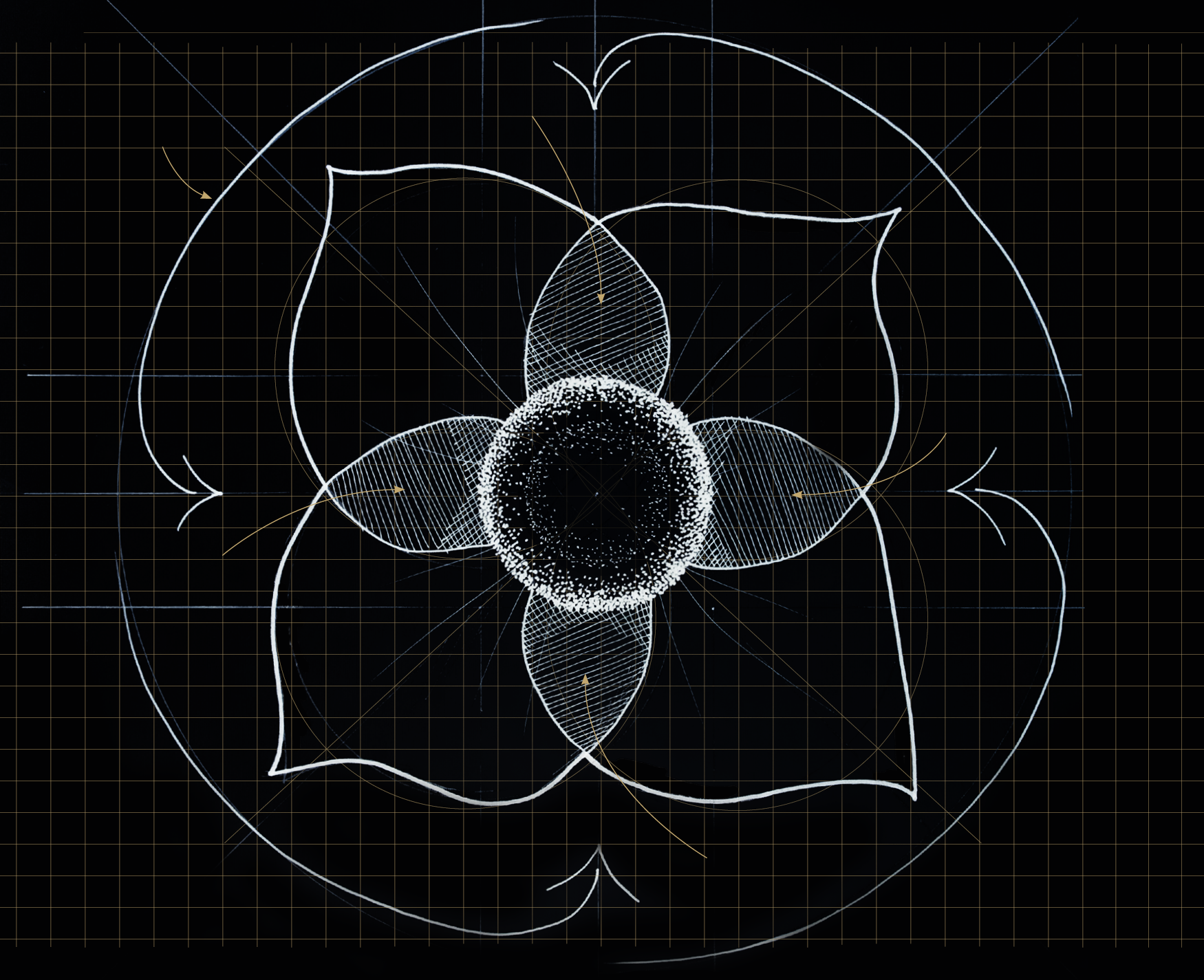
The Impact Congruence Framework is a diagnostic and developmental model that helps purpose-driven organisations assess how well their Culture, Mindset, Structure & Resourcing, and People are attuned to one another and to their broader identity and purpose.
Curated from the lived experiences, training and skills acquired in the extreme world of humanitarian response and captured in The Record, it places human experience and relational integrity at the centre of organisational health, recognising that in mission-driven contexts, sustainable impact depends on coherence across all four of these interdependent domains.
Click on the labels to discover more
Leadership
Nest
Partnerships
Resourcing
Workforce
Learning
& Impact
The Health Check
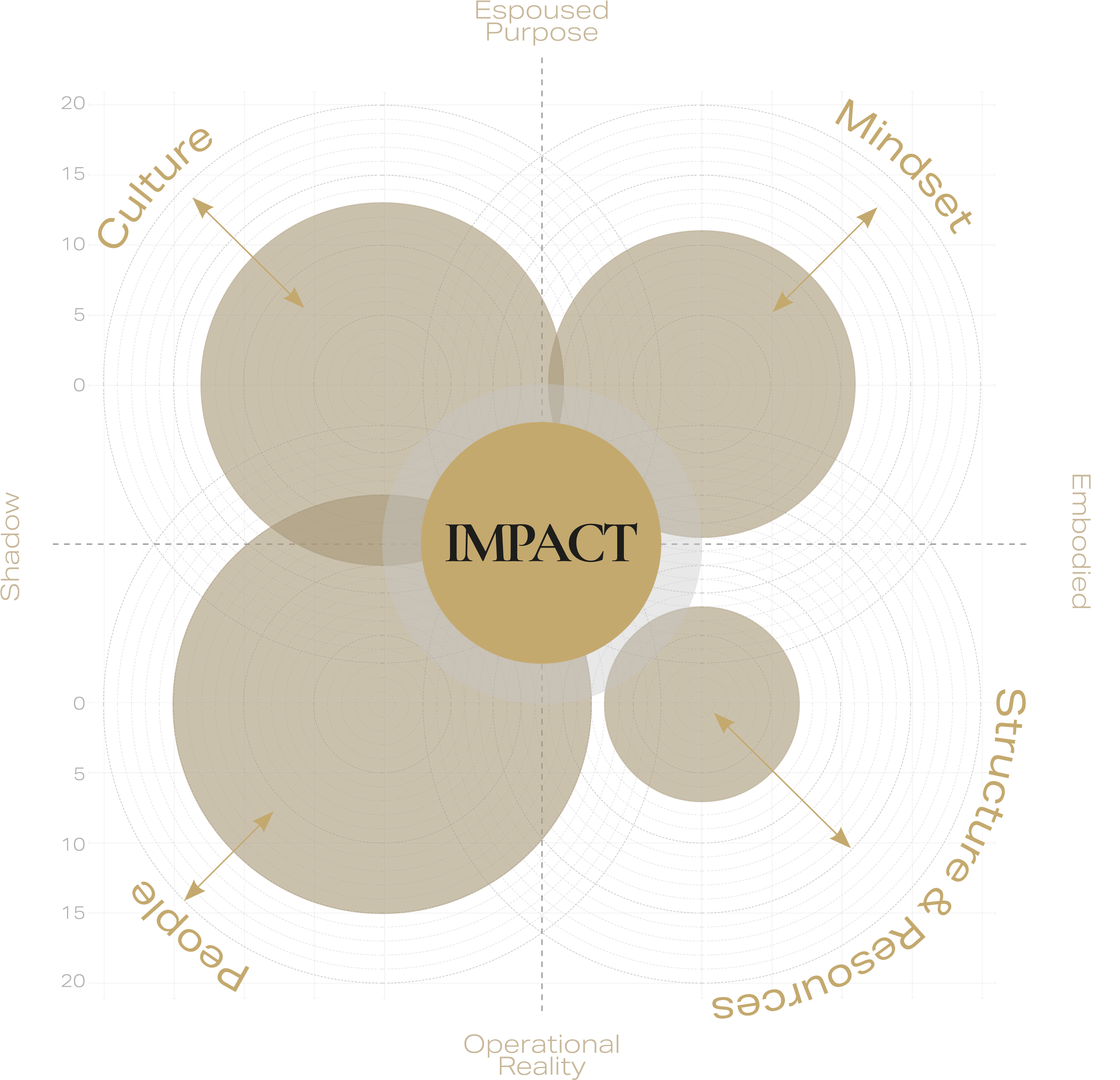
The Impact Congruence Health Check is a diagnostic tool designed to help leaders assess how attuned or fragmented their organisation's current experience is.
It draws on psychological and organisational theory to uncover what is often unseen in organisational life, combining structured data with human interpretation. Rather than issuing a verdict, it functions as a mirror, showing the misalignments between purpose and practice, values and behaviour, and structure and care.
The methodology
The process begins with an initial interview to establish organisational context and background, followed by an all-staff survey in which a broad, anonymous cross-section of colleagues rate a set of reflective statements across four domains on a Likert scale.
The quantitative data produces two mathematical outputs per domain: a mean score, which reflects the overall level of sentiment or perceived health, and a standard deviation, which captures how consistently or inconsistently that experience is shared across the organisation. The data is initially aggregated and pattern-analysed using trained AI tools, with a specialist human practitioner then applying contextual knowledge and human judgement to translate those signals into the Insights Brief.
The overall rating system
Organisations are categorised into one of three health statuses: Flourishing, Stressed, or Wilting.
A Flourishing organisation shows moderate to high mean scores with low variability across all four domains, indicating coherence and shared experience.
A Stressed organisation typically shows low means that point to broader breakdowns in trust, clarity, or support.
A Wilting organisation shows imbalance across domains, often with some areas carrying disproportionate load.
Three analytical lens
The Petal lens reads each of the four framework domains (Culture, People, Mindset, and Structure and Resourcing) using its mean score and standard deviation. A high mean with low standard deviation indicates coherence and vitality within that domain; a low mean with high standard deviation suggests fragmentation, tension, or uneven experience across teams or functions. Together, these two measures allow leadership to see not just what people are experiencing, but how widely and evenly that experience is distributed across the system.
The Balance of Experience lens maps where organisational experience sits across two intersecting axes: a horizontal emotional axis running from Shadow (unspoken or unresolved) to Embodied (actively lived and integrated), and a vertical functional axis running from Espoused Purpose (declared values and strategy) to Operational Reality (what people actually experience day to day). A Flourishing system shows balance across all four quadrants, while Wilting and Stressed systems reveal characteristic imbalances, such as strong cultural aspiration without structural grounding, or purpose that is stated but not credibly enacted. The lens helps leaders see whether different parts of the system are in dialogue with one another or pulling in opposing directions.
The Lapping and Gapping lens reads the relational space between pairs of petals, where the framework locates shared properties that emerge from healthy interconnection between domains. Where petals visibly overlap, this acts as a proxy indicator that conditions may exist for those shared elements to function well; gaps between petals suggest potential strain, isolation, or absence of that shared connective tissue. Leaders are encouraged to treat both overlaps and gaps as invitations to inquiry rather than conclusions, as overlap can conceal fragility and gaps may contain unrecognised potential.